Why We Keep Playing
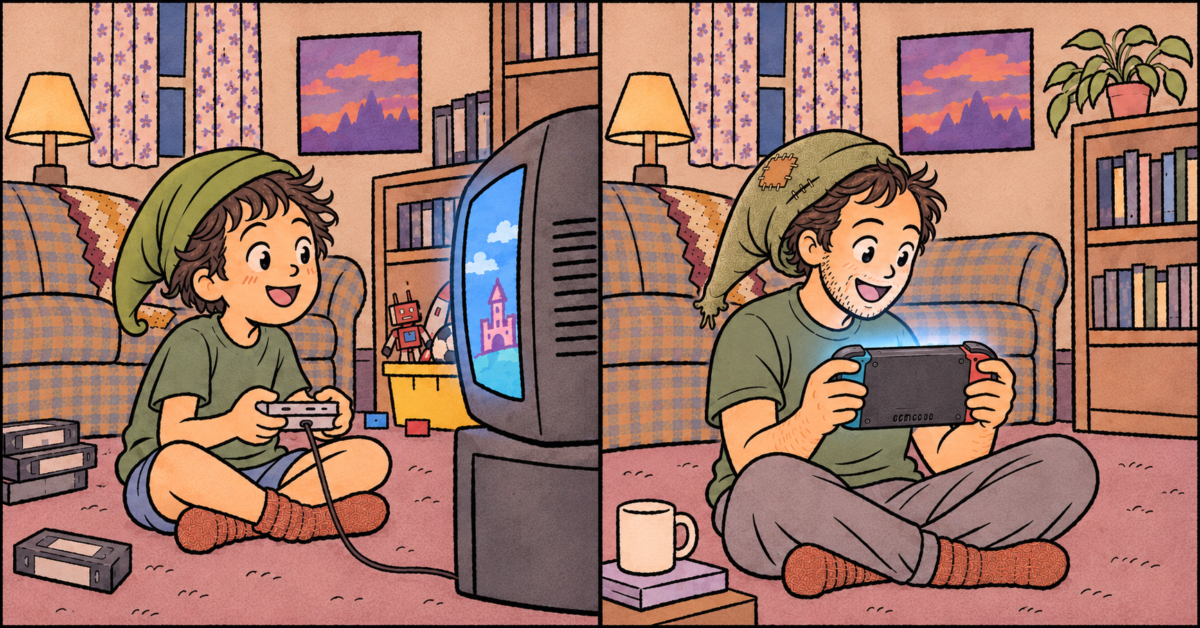
As a kid, nobody explained why a game pulled you in. You’d start playing without knowing what to expect, and at some point, without noticing, you couldn’t stop. It wasn’t the story, or anticipation of what was coming: it was that physical need for one more try, one more level before turning off the console.
Thirty years later, I still recognize that exact feeling, except now I get pulled in by a forty-second trailer or a clip of someone playing the demo before I do. GTA 6 launches Thursday. The Ocarina of Time remake came out almost two weeks ago. At Inflexion we like video games, some of us more than others, and at some point in our history we even built our own games, though that’s another story. These two launches have us, once again, feeling that same pull to keep watching, unable to stop, just like as kids we couldn’t stop playing.
But what really interests us about GTA 6 and Zelda isn’t launch day. It’s everything that comes after.
The Economics of Staying in the Game
Grand Theft Auto V sold nearly 235 million copies. That’s not a small number: it got there without technically being “a new game” for most of those years. Rockstar kept it alive with updates, online modes, new content, season after season, for over a decade. GTA V hit a billion dollars in sales in less than three days, the fastest an entertainment product had ever reached that mark. But that billion wasn’t the end of the story: it was the start of a decade of people who kept playing, kept buying, kept asking for more.
That’s what separates a game you play once from a saga: it’s not day-one quality, though that helps. It’s that the people who bought it want to stay. They want the expansion, the DLC, the new mode, the next season. And when a studio gives its players exactly that, with quality, the review writes itself. Nobody has to ask anyone to recommend the game they’ve been playing for three years straight.
The same thing happens with software, even if we have to say it without a soundtrack or a trailer. A product that solves day one’s problem and never gets opened again is, at best, a favor you did for someone once. A product that keeps growing, that adds exactly what its people are asking for, that feels like a conversation instead of a one-time delivery, is the one people don’t want to leave. And people who don’t want to leave your product are the ones who keep recommending it without being asked.
What This Means for Us
The hard part isn’t building the first version. The hard part is knowing, out of everything your people could ask for, what’s actually going to keep them playing. You don’t guess that: you research it. That’s why every new project we take on starts with a discovery phase, before writing a single line of code. That’s where we find out who your user really is, what they expect from your product, and what it would take for them to stay instead of using it once.
Rockstar and Nintendo don’t guess which expansion to release. They study their players obsessively, for years, before deciding what comes next. We do the same with every client, except instead of a final boss, the challenge is usually an integration nobody had managed to connect properly.
Tools change. What doesn’t change is that a good product doesn’t end the day it ships, it ends the day people stop wanting to open it again. If you’re building something and want your people to stay in the game, you’ll find us at inflexionsoftware.com.